Nestled within the lush mountains of Fujian province in southeastern China, the remarkable Tulou (土楼) stand as testaments to resilience, architectural ingenuity, and a deep-rooted sense of community.

Constructed primarily by the Hakka people, these awe-inspiring communal homes, built with rammed earth, wood, and stone, were designed to safeguard entire clans from external threats while fostering a self-sufficient way of life.
A Glimpse into History
Dating back over a thousand years, the origins of Tulou can be traced to the Song and Yuan dynasties (11th–13th centuries). Originally from northern China, the Hakka people migrated southward to escape war and famine, eventually settling in Fujian’s remote, mountainous regions.
Seeking security and communal harmony, they developed Tulou—massive, fortified homes with thick earthen walls, a single gated entrance, and gun holes for defense. Over time, these structures evolved into sophisticated multi-story complexes, housing hundreds under one roof.

In 2008, UNESCO recognized 46 of these extraordinary structures as World Heritage Sites, acknowledging their cultural and architectural significance. Today, while some Tulou have become popular tourist attractions, many remain inhabited, preserving traditions that have lasted for centuries.
Architectural Significance of Shapes
Tulou structures are predominantly circular or rectangular. The circular Tulou symbolize unity and harmony, reinforcing the communal spirit of Hakka life. This design also offered defensive advantages, providing residents with a panoramic view of the surroundings to keep a lookout for bandits and wild animals, which were common threats in the remote, mountainous regions where Tulou were built.


Conversely, the rectangular Tulou emphasize stability and balance, reflecting the grounded nature of their inhabitants. Both shapes were meticulously designed to foster social cohesion and ensure security.
Exploring Nanjing’s Tulou: A Personal Journey
Scattered across Fujian, Tulou are primarily found in Nanjing, Yongding, and Hua’an counties. During my journey through this region, I explored Nanjing County, home to some of the most iconic Tulou, making it a must-visit destination for history and architecture enthusiasts.
Here are the highlights of my exploration:
1. Yunshuiyao Ancient Town (云水谣古镇)

Nestled along the gentle banks of a meandering river, Yunshuiyao Ancient Town exudes a tranquil charm that feels untouched by time. The town is adorned with a magnificent cluster of ancient banyan trees (榕树), some over a thousand years old.

Their sprawling canopies cast dappled shadows on the cobblestone pathways below, creating a scene both peaceful and surreal. Walking beneath these venerable giants, one can’t help but feel enveloped by the whispers of history.
Within Yunshuiyao, two Tulou stand as testaments to the region’s architectural ingenuity:
- Huaiyuan Building (怀远楼): This exquisitely preserved circular Tulou, built in 1905 during the late Qing Dynasty, is celebrated for its intricate wooden carvings and harmonious design. Comprising four stories with a total of 136 rooms, Huaiyuan Building reflects the architectural sophistication of its era.


- Hegui Building (和贵楼): Recognized as the tallest square Tulou, Hegui Building is a five-story structure ingeniously constructed on marshy terrain. Its enduring stability on such a foundation has earned it the name “the oddest structure in the world.”

📌 Stay tuned for a deeper dive into my week-long experience in Yunshuiyao—coming soon!
2. Taxia Village (塔下村)
Established in 1426 by the Zhang family, Taxia Village is a quintessential Hakka settlement. The village is renowned for its well-preserved Tulou and traditional stilted wooden houses, known as “Diaojiaolou” (吊脚楼), which line the riverbanks, creating a harmonious blend of natural beauty and architectural heritage.
Taxia is particularly celebrated for the longevity of its residents, attributed to the pristine environment and wholesome lifestyle.
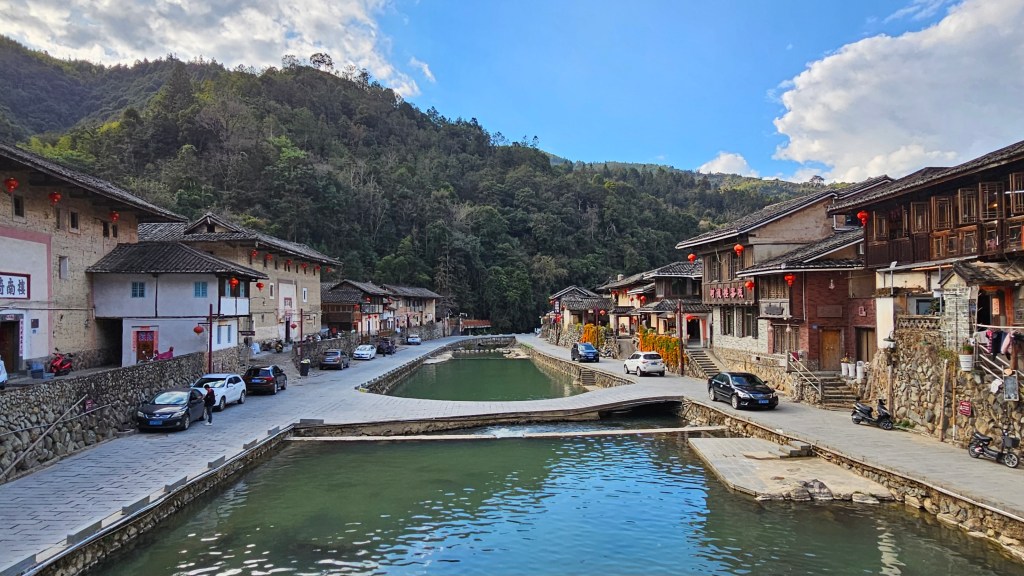
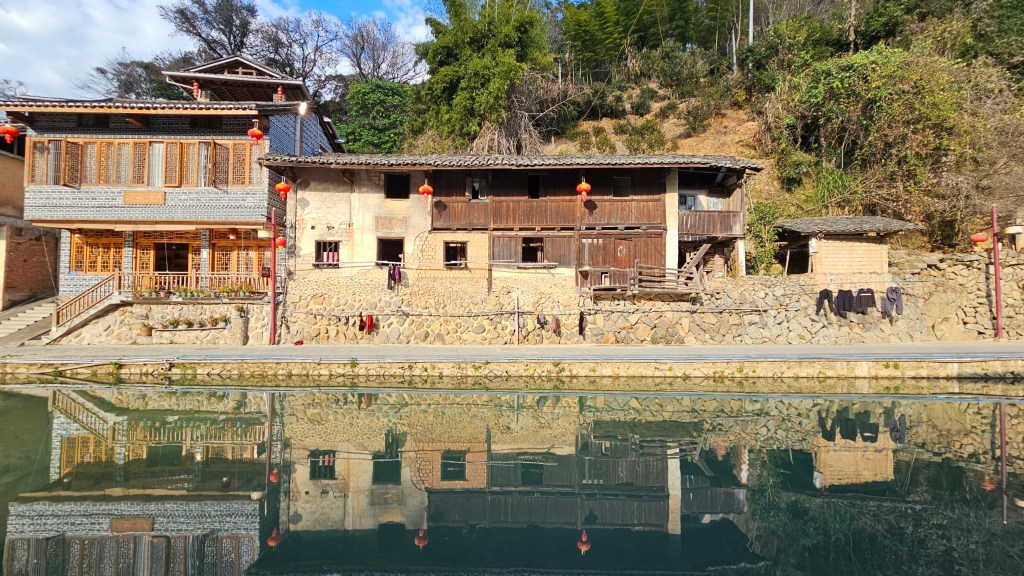

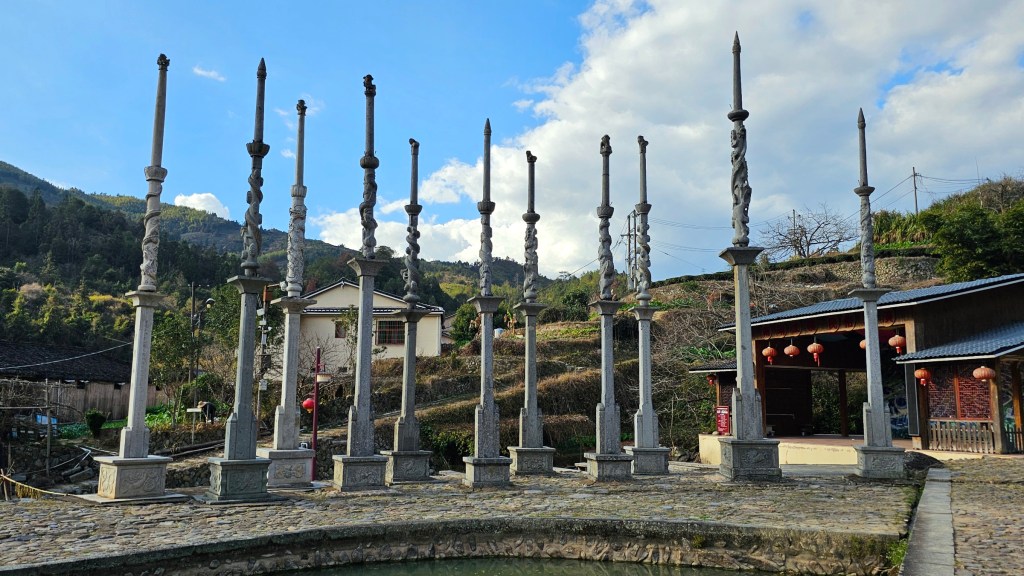
3. Yuchanglou (裕昌楼)
Located in Xiaban Village, Yuchanglou was constructed in 1308 during the Yuan Dynasty and stands as one of the oldest and largest circular Tulou. This edifice is particularly famed for its “leaning” wooden pillars; some tilt at angles up to 15 degrees.

This structural peculiarity, resulting from a construction anomaly, has remarkably withstood the tests of time including earthquakes and centuries of weathering, showcasing the resilience and ingenuity of ancient Chinese architecture.
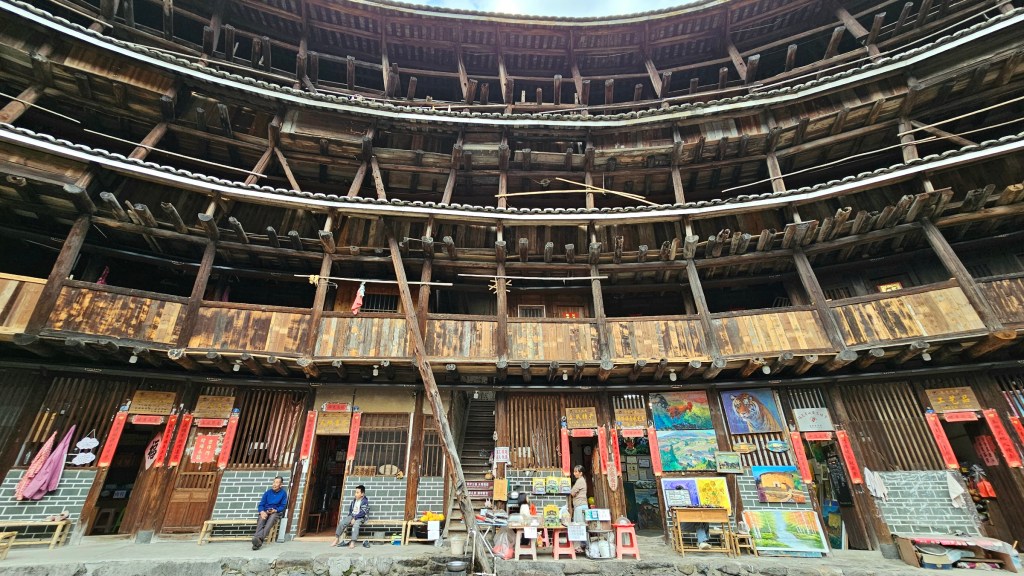
🎥 Watch this short video for a closer look at Yuchanglou’s fascinating leaning architecture
4. Tianluokeng Tulou Cluster (田螺坑土楼群)
This iconic cluster features a unique arrangement of five Tulou: a square building at the center, surrounded by three circular ones and an oval-shaped Tulou, resembling a traditional Chinese dining setup referred to as “Four Dishes and One Soup (四菜一汤)”.
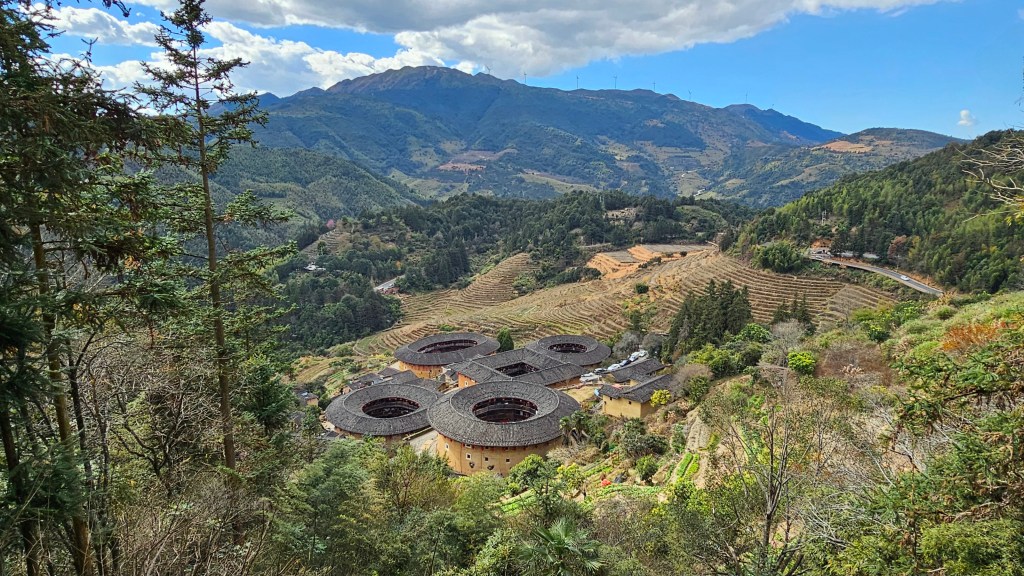
From a nearby viewing platform, the harmonious arrangement of these earthen structures against the verdant mountainous backdrop offers a breathtaking panorama.

🗺️ View the map to see where each Tulou is located.
Fascinating Insights into Tulou Life
Beyond their architectural marvels, Tulou reflect a unique way of life, deeply rooted in tradition. Here are some fascinating aspects I learned from local guides and villagers:
- Structural Variations: Most Tulou are two to four stories high, with wealthier families historically constructing taller buildings. The Hegui Building (和贵楼) stands out as the tallest, boasting five stories—a testament to ambition and architectural skill.
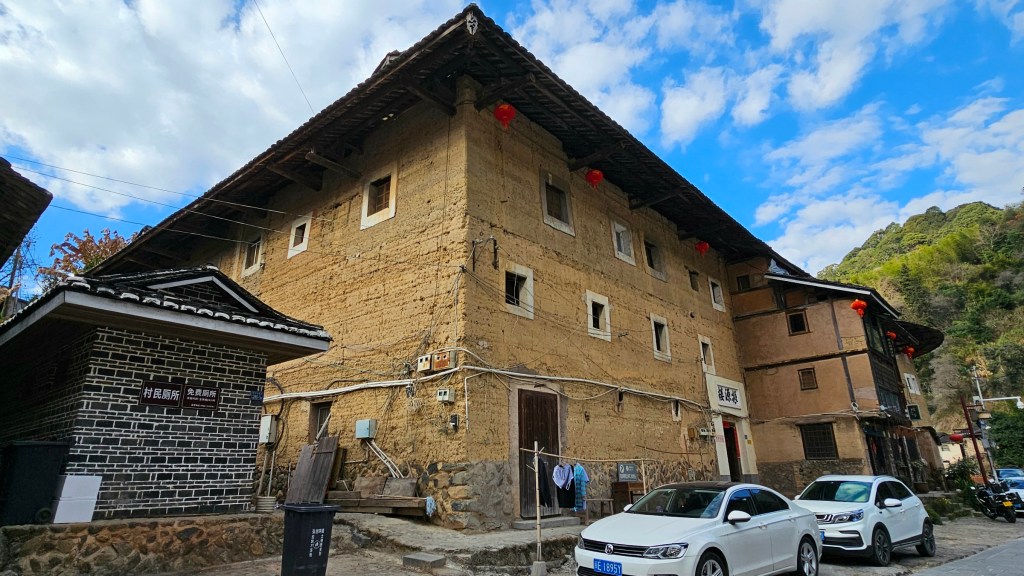
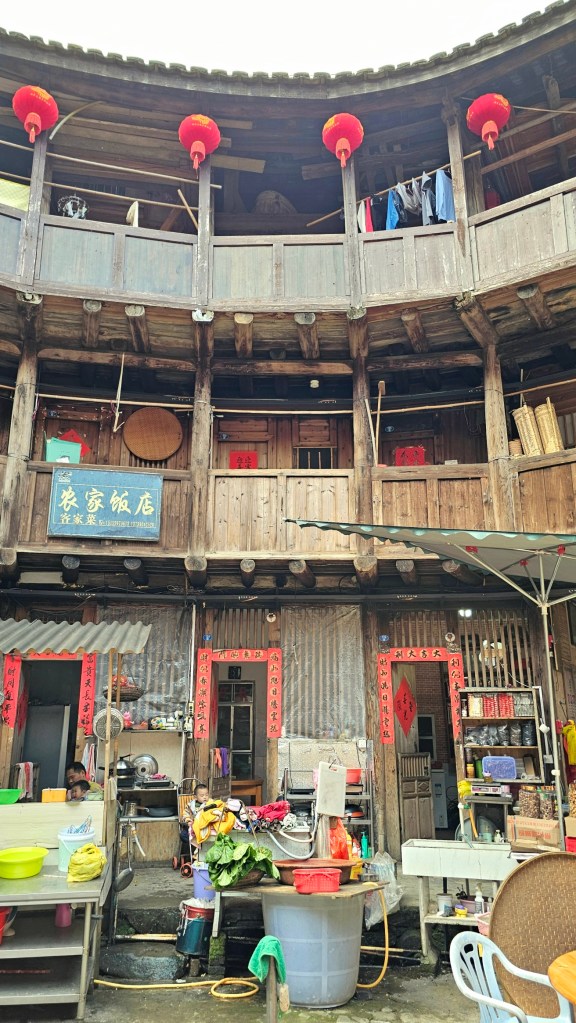
- Internal Layout: Each family occupies a vertical section, with the ground floor serving as a kitchen, the second as a granary, and the upper levels as sleeping quarters. This layout fosters both functionality and family bonding.
- Sanitation Practices: Traditionally, bathrooms were communal and located outside the main structure. Residents often used buckets in their rooms, particularly at night, reflecting the communal ethos of Tulou living.


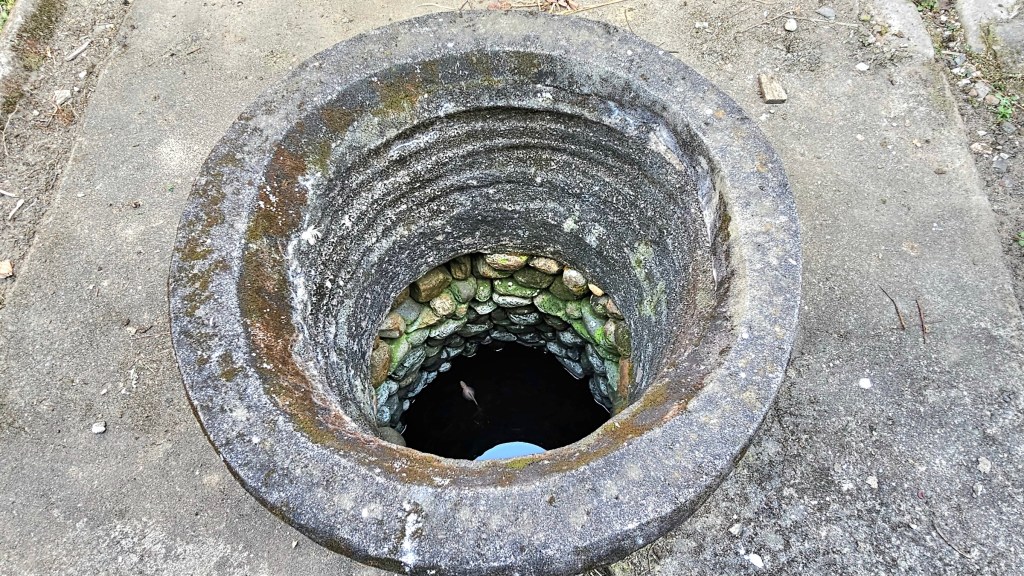
- Water Safety Measures: To ensure potable water, some Tulou residents placed turtles or fish in their wells. The continued health of these creatures signified clean water, while any distress signaled contamination.
- Religious and Ancestral Worship: Most Tulou feature a central hall dedicated to worshiping ancestors, highlighting the deep-rooted filial piety in Hakka culture.

Preserving a Living Heritage
Despite modernization drawing younger generations into cities, many families still reside in the Tulou, preserving their ancestral traditions. Visitors can witness daily life unfold within these earthen walls, watching the elders sipping tea in courtyards, children playing beneath wooden balconies, and echoes of history lingering in every corridor.

For those seeking an immersive experience, an overnight stay in a Tulou guesthouse offers a rare glimpse into this unique way of life. The hospitality of the Hakka people, combined with the tranquility of the Fujian countryside, makes for an unforgettable journey through time.
🌙 My story about spending the night in Tianluokeng is coming soon—stay tuned!
Final Thoughts: More Than Just Earth Walls
A visit to Fujian’s Tulou is more than just a sightseeing experience—it’s a journey into the heart of a centuries-old culture. These remarkable structures stand as living monuments to the ingenuity, resilience, and communal spirit of the Hakka people.
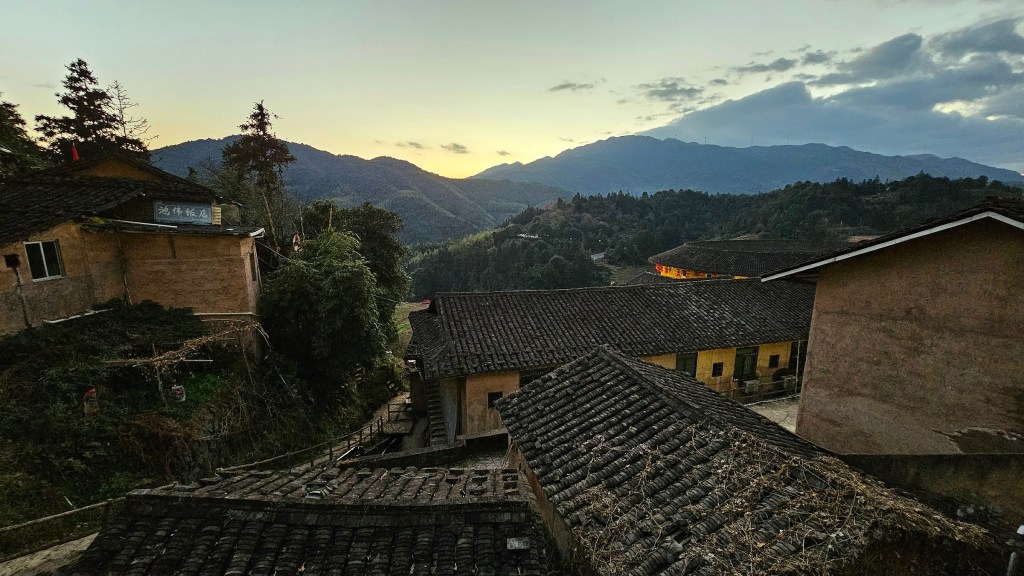
Whether strolling through the winding corridors of a Tulou or admiring their striking silhouettes against the mountainous landscape, one cannot help but be captivated by their enduring charm.
🗣️ Share Your Thoughts!
What did you find most intriguing about the Tulou? Have you encountered similar architectural marvels? Or perhaps this post sparked a new destination on your travel wishlist? I’d love to hear your thoughts, questions, or experiences—let’s connect in the comments below!



 Where Jasz Explores
What an amazing look into the history and architecture of Fujian’s Tulou! The insights into daily life and the Hakka people’s ingenuity were fascinating. I’m excited to read more about Yunshuiyao and Tianluokeng in your upcoming posts!
LikeLike
Thank you so much for your kind words! I’m really glad you enjoyed the deep dive into Fujian’s Tulou and the Hakka heritage. It means a lot to hear that. Yunshuiyao was especially memorable and I can’t wait to share more about it (and Tianluokeng too) very soon. Thanks again for reading and for your support!
LikeLiked by 1 person
You’re so welcome, JaszMin! I’m really looking forward to the next chapters, your storytelling makes these places come alive.
LikeLike
That truly means a lot, thank you. I’ll keep doing my best to share each journey as honestly and vividly as I can. More blog stories coming soon 🙂
LikeLiked by 1 person
And I’ll be here, eagerly reading each one! 😊 Your passion and authenticity shine through every post, keep sharing your beautiful journeys, JaszMin!
LikeLike
Thank you for this post! I learned a lot from it. I really enjoyed the pictures and have put this place my travel list for the future. :)
LikeLike
Hi Chemey! Thank you so much for reading! I’m really happy to hear you enjoyed the post and the photos. It’s such a special place and I hope you get to visit it someday. Let me know if you ever do 🙂!
LikeLike
作为一名中国读者,我非常感激你在这篇文章中投入的尊重和细节。你对‘四菜一汤’和集体生活方式的看法非常有见地。很高兴你在福建度过了愉快的时光。
LikeLiked by 1 person
嗨凌峰! 非常感谢你的留言。能得到本地读者的认可对我来说意义特别大。我在福建学习到的“四菜一汤”和土楼里的集体生活方式,让这段旅程变得格外深刻。很高兴这些感受能够在文章里传达出来。谢谢你阅读,也希望未来还能再次走访福建。
LikeLike
写得很棒!被你彻底种草了福建土楼。对云水谣古镇的榕树和和贵楼屹立不倒的故事印象深刻,期待你的下一篇分享!
LikeLiked by 1 person
嗨凌峰! 非常感谢你的支持!很高兴听到你被土楼“种草”了。云水谣的古榕树和和贵楼背后的故事真的很动人,我也留下了深刻的印象。谢谢你的期待,我会继续努力分享更多旅程中的故事。
LikeLike